 Our Roadmap to 2030
Social Equity and Health
Addressing health inequality to give everyone an equal opportunity in life

Health Inequality
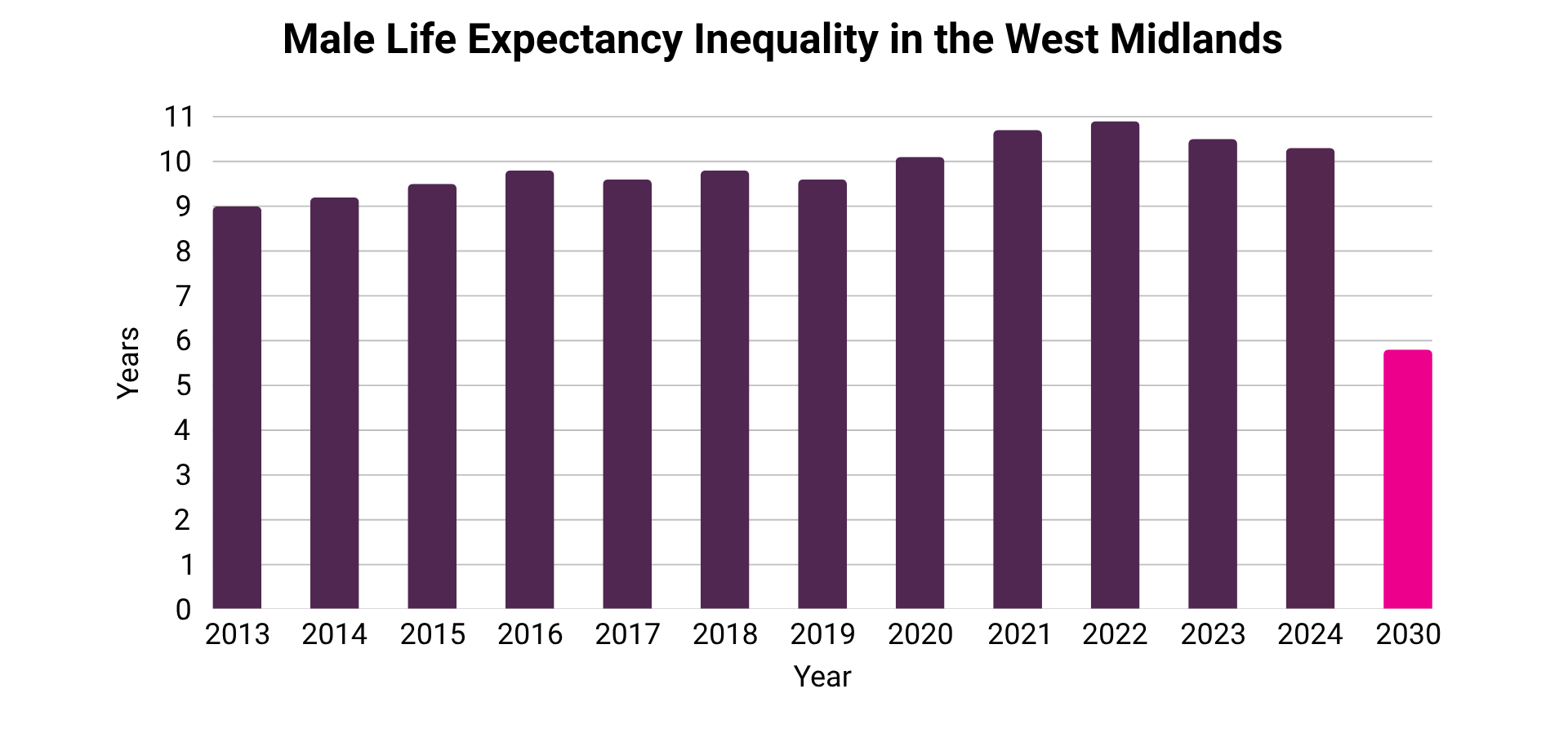
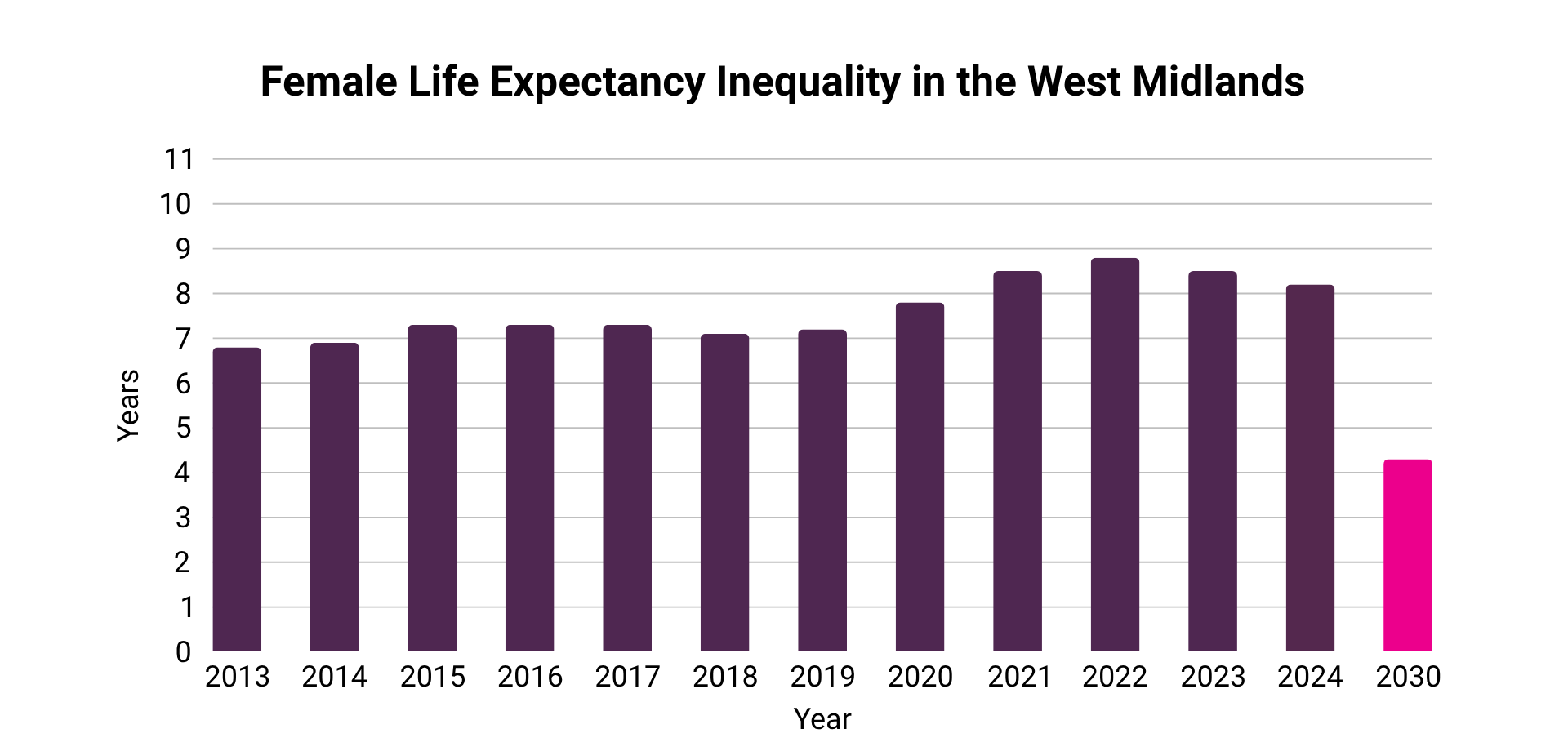
Our target (1): By 2030, achieve a 40% decrease in male and female health inequality from 2019 levels across the West Midlands.
Summary of latest findings:
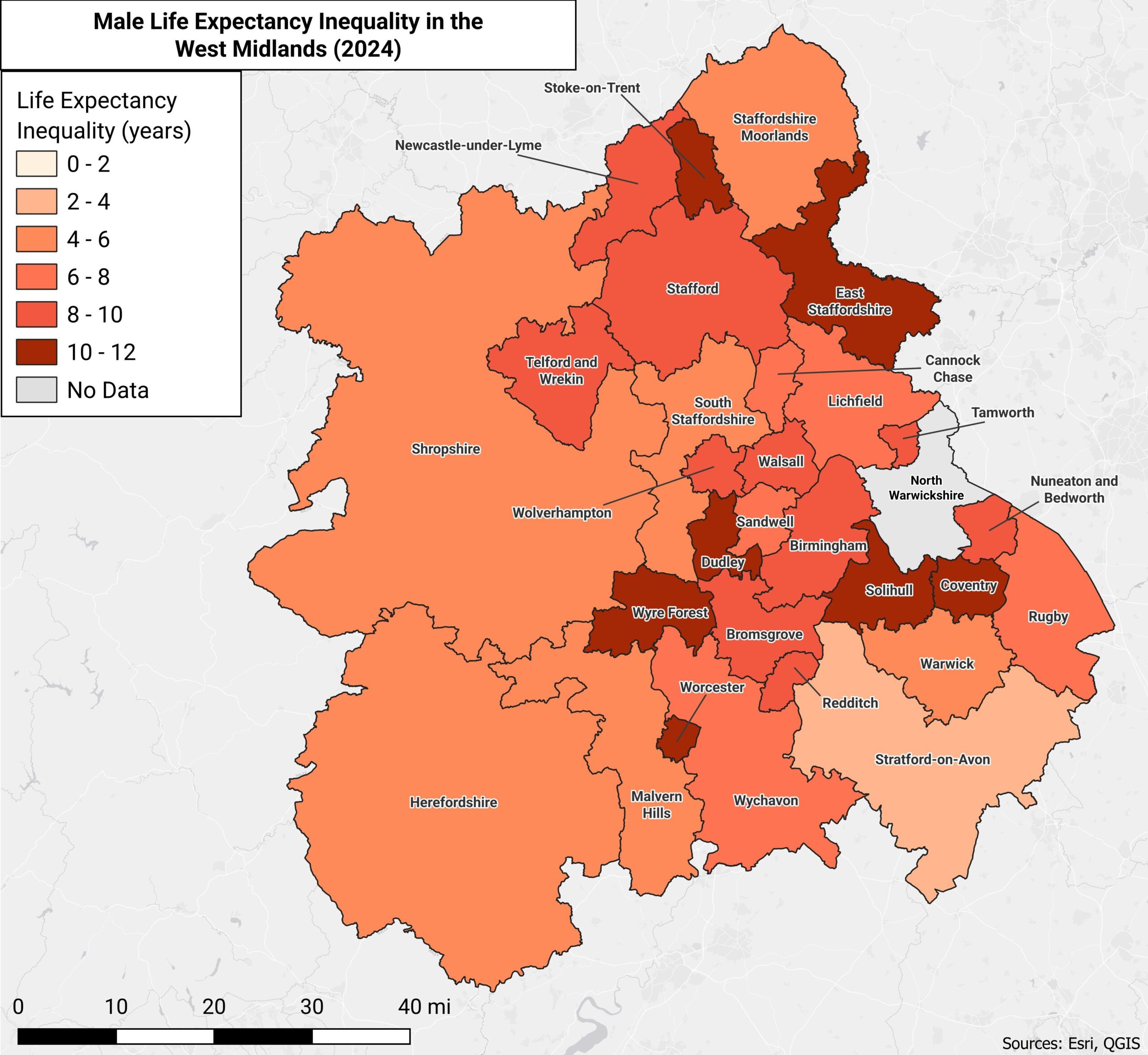
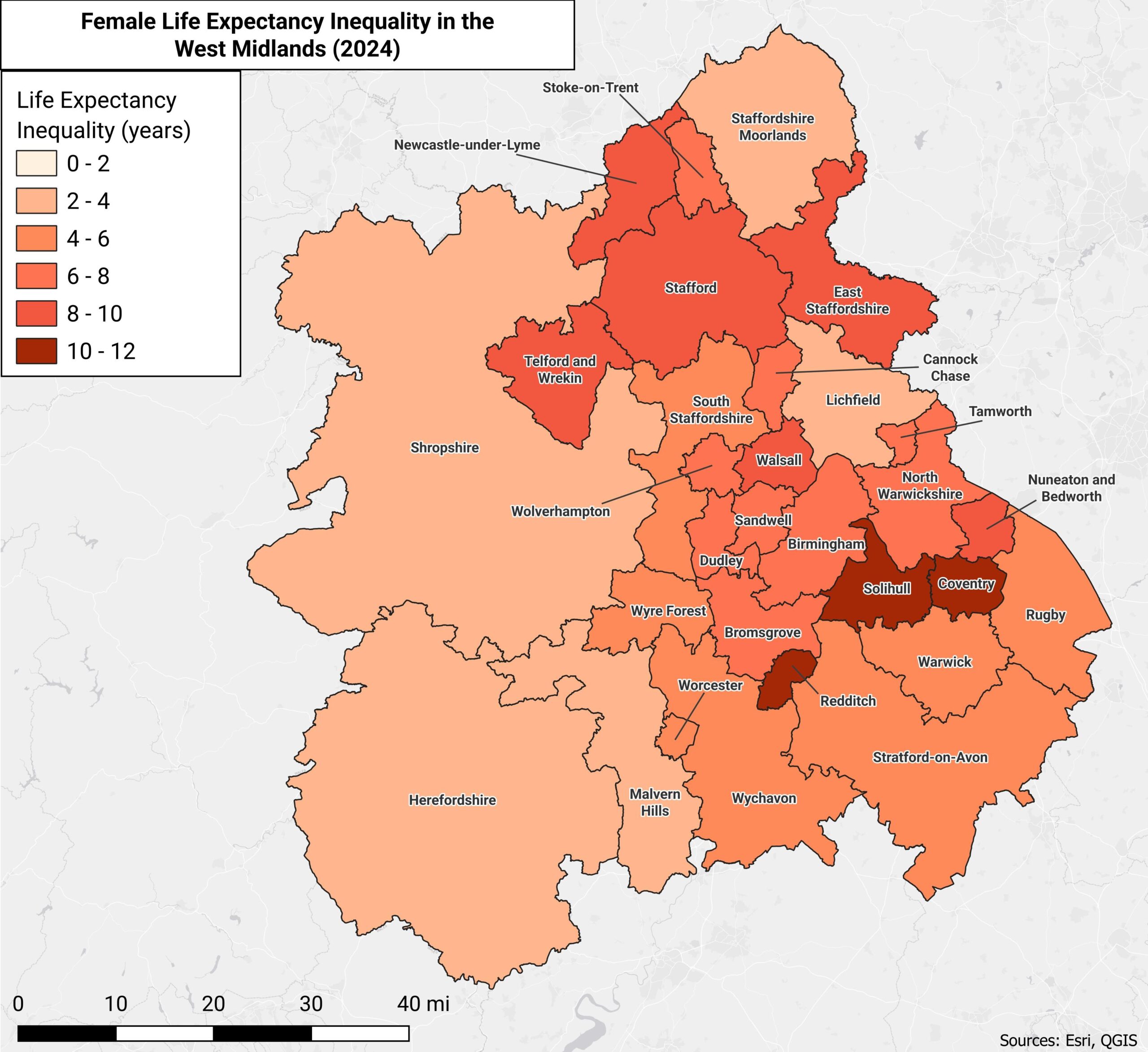
- The latest available data shows a decrease in life expectancy inequality for both males and females in 2024, meaning that the difference in life expectancy dependent upon where an individual lives is lesser.
- This is the second successive year where both data have decreased. This is the first time this has happened since we began measuring this data in 2013.
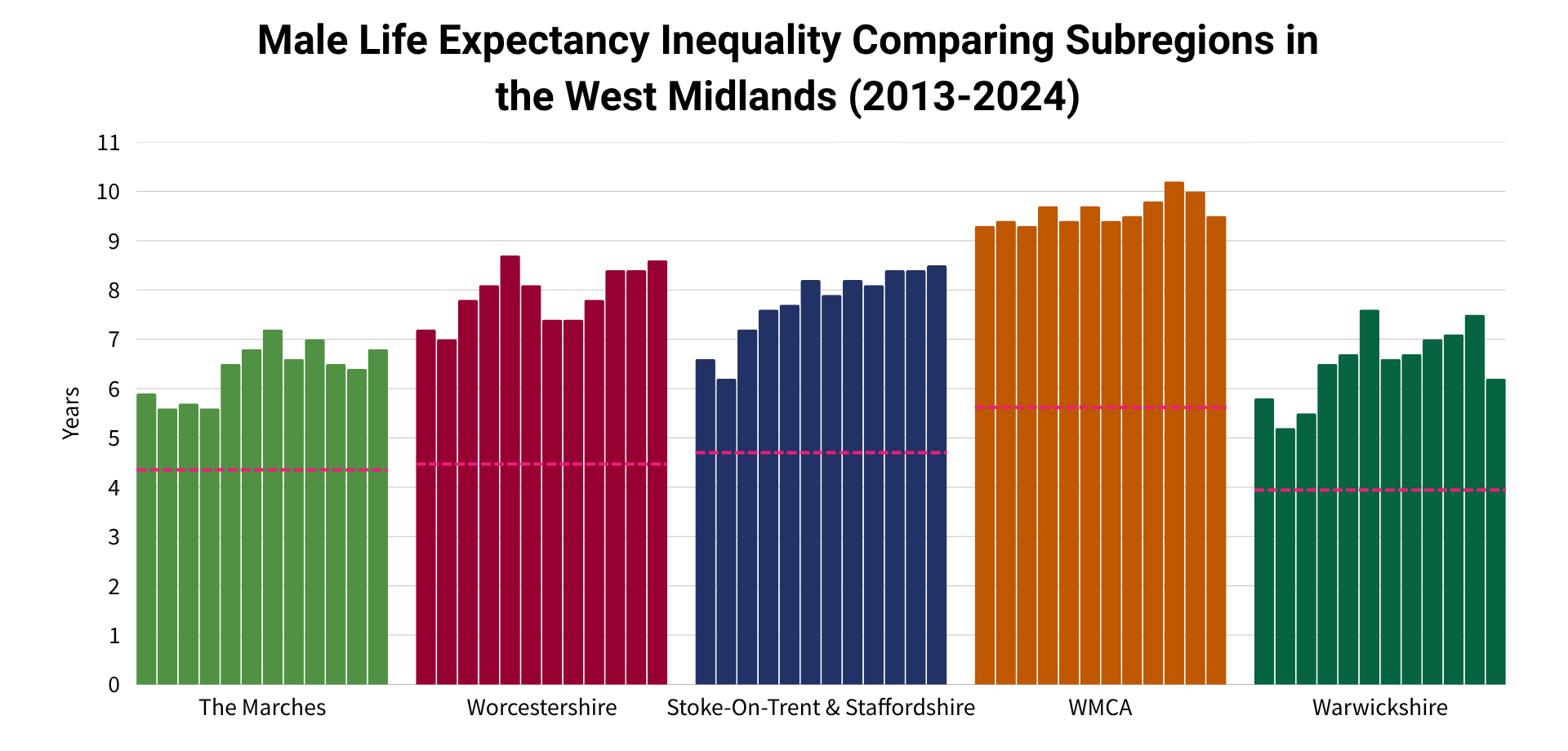
- Two subregions have experienced decreases in 2024 for male life expectancy inequality. These are the WMCA (-0.5 years) and Warwickshire (-1.3 years).
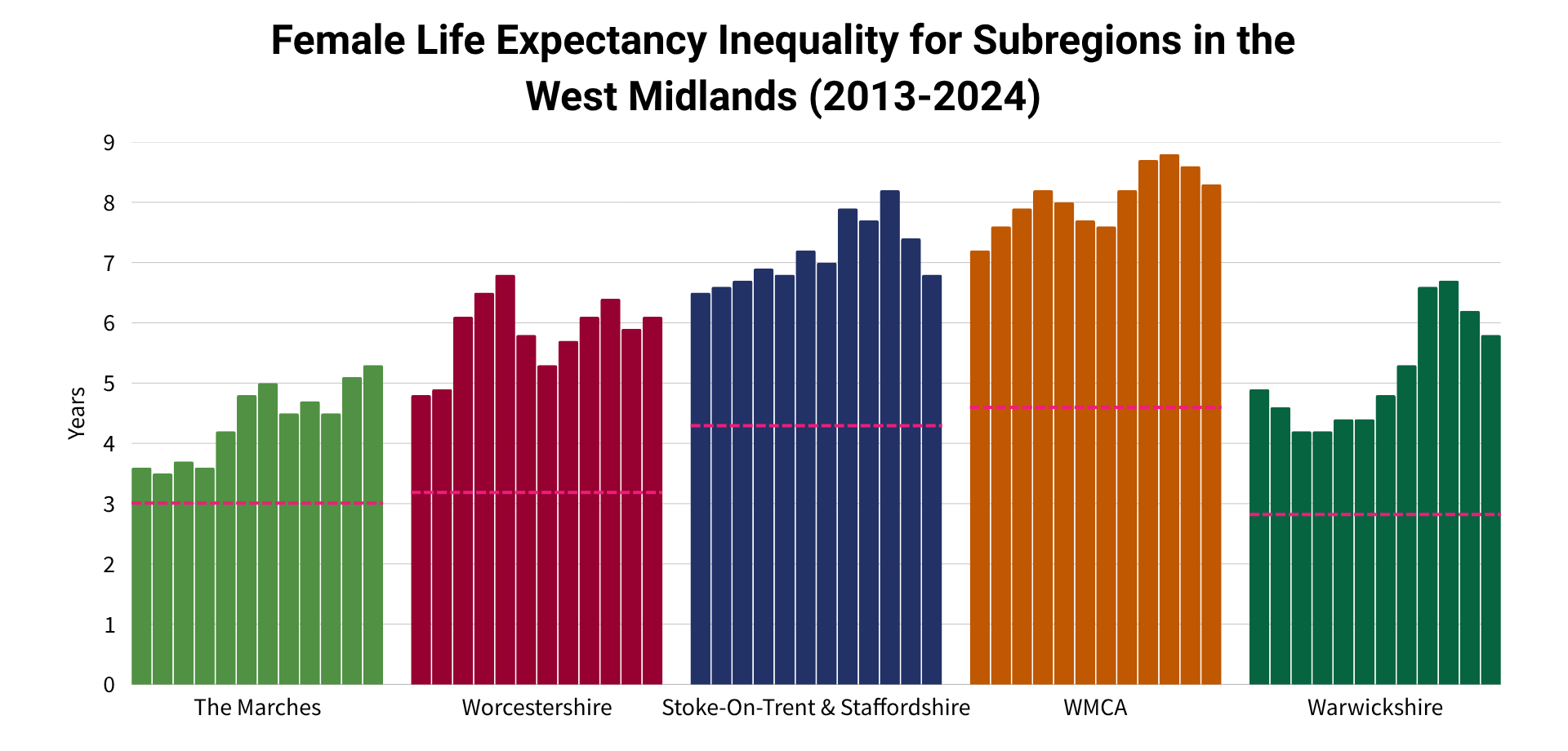
- For females, three subregions have seen decreases – Stoke on Trent and Staffordshire (-0.6 years); WMCA (-0.3 years); and Warwickshire (-0.4 years).
- Even if the same rate of reduction over the last two years continues, the region is not expected to meet either target by 2030.
Progress: We currently rate progress on achieving our target as:
Fuel Poverty
Our target (2): By 2030, reduce the proportion of households in fuel poverty by 50% from the 2019 levels across the West Midlands,
Summary of latest findings:
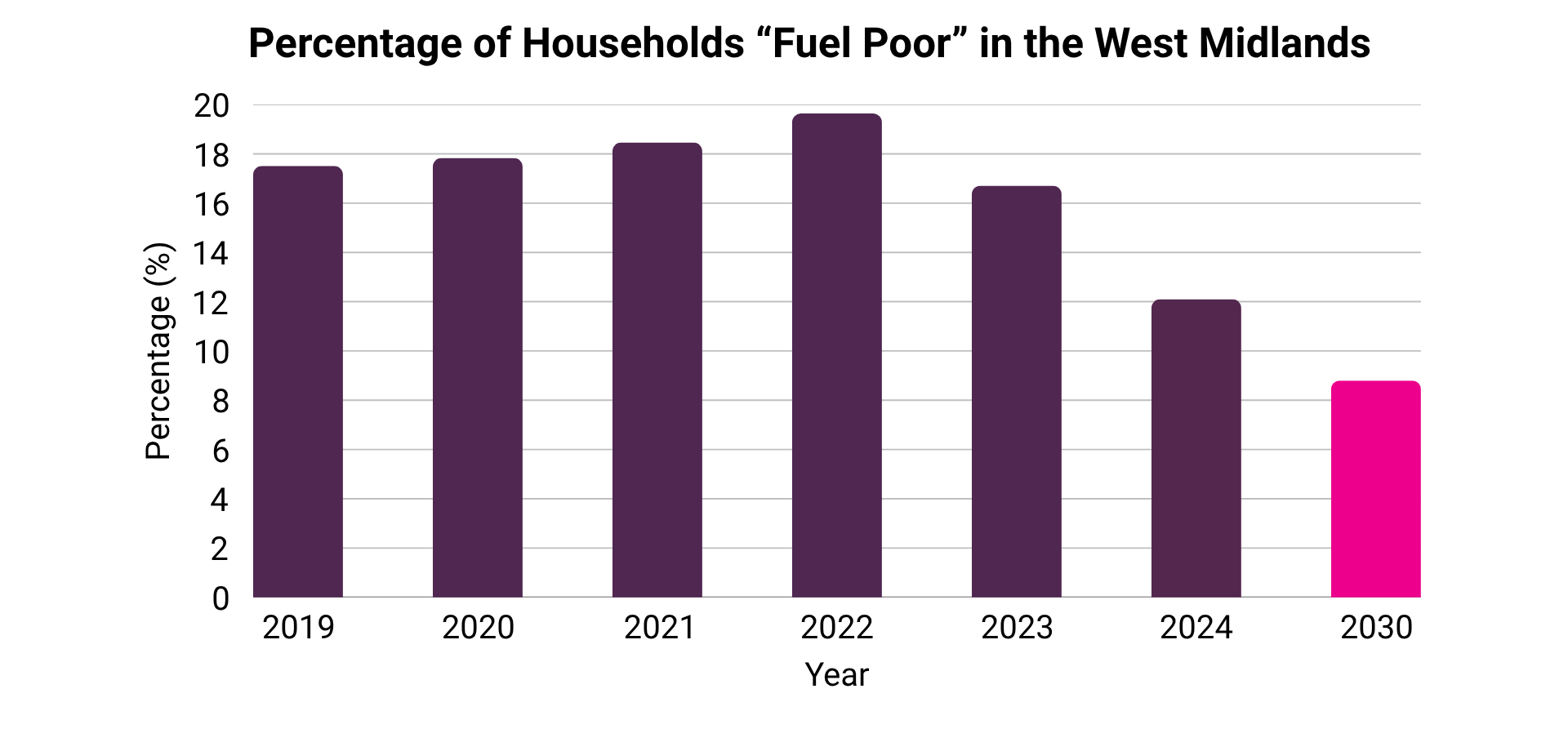
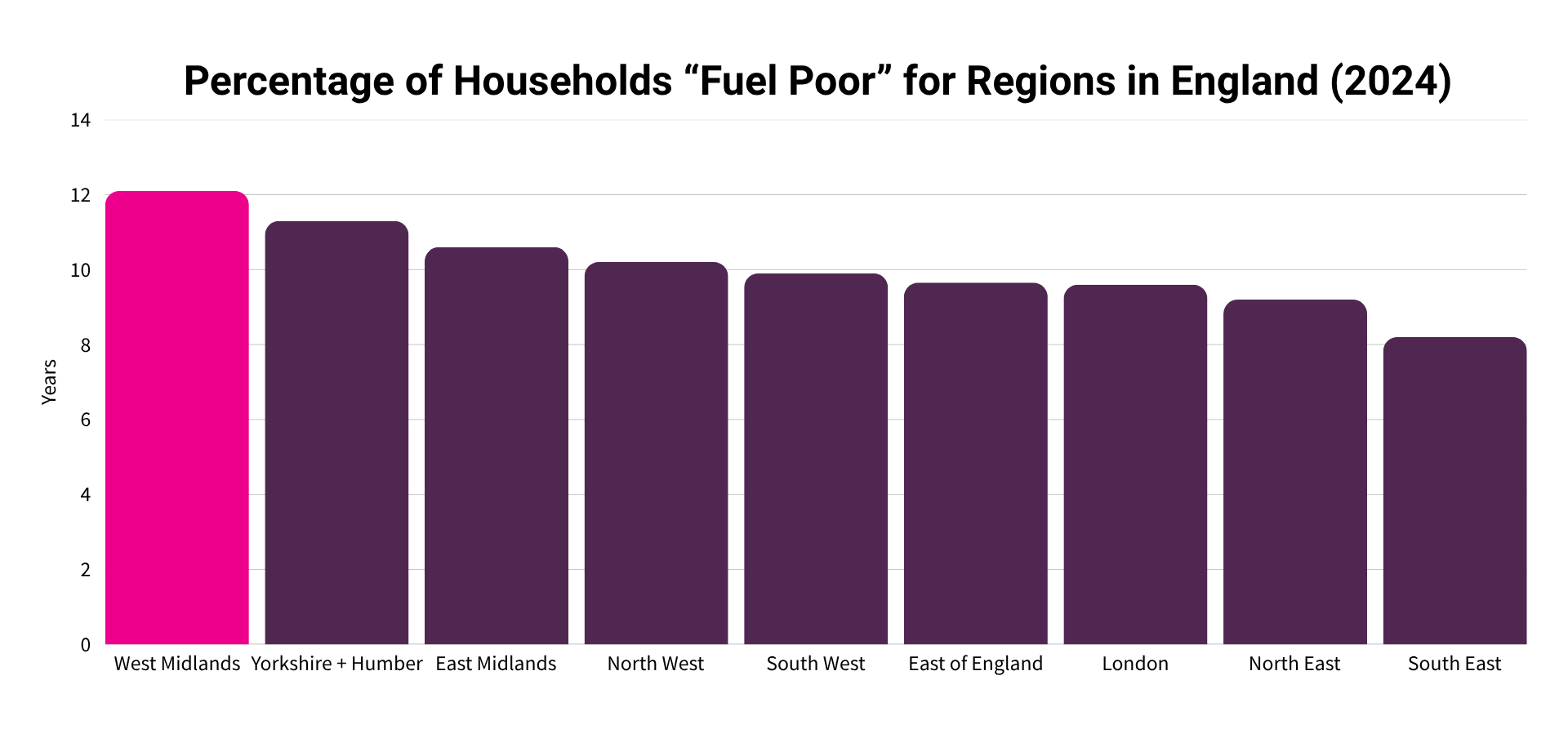
- The proportion of households in fuel poverty in the West Midlands saw a significant decrease in 2024 and is now at 12.1%.
- Since 2022, fuel poverty rates in the West Midlands have decreased by 38.4%.
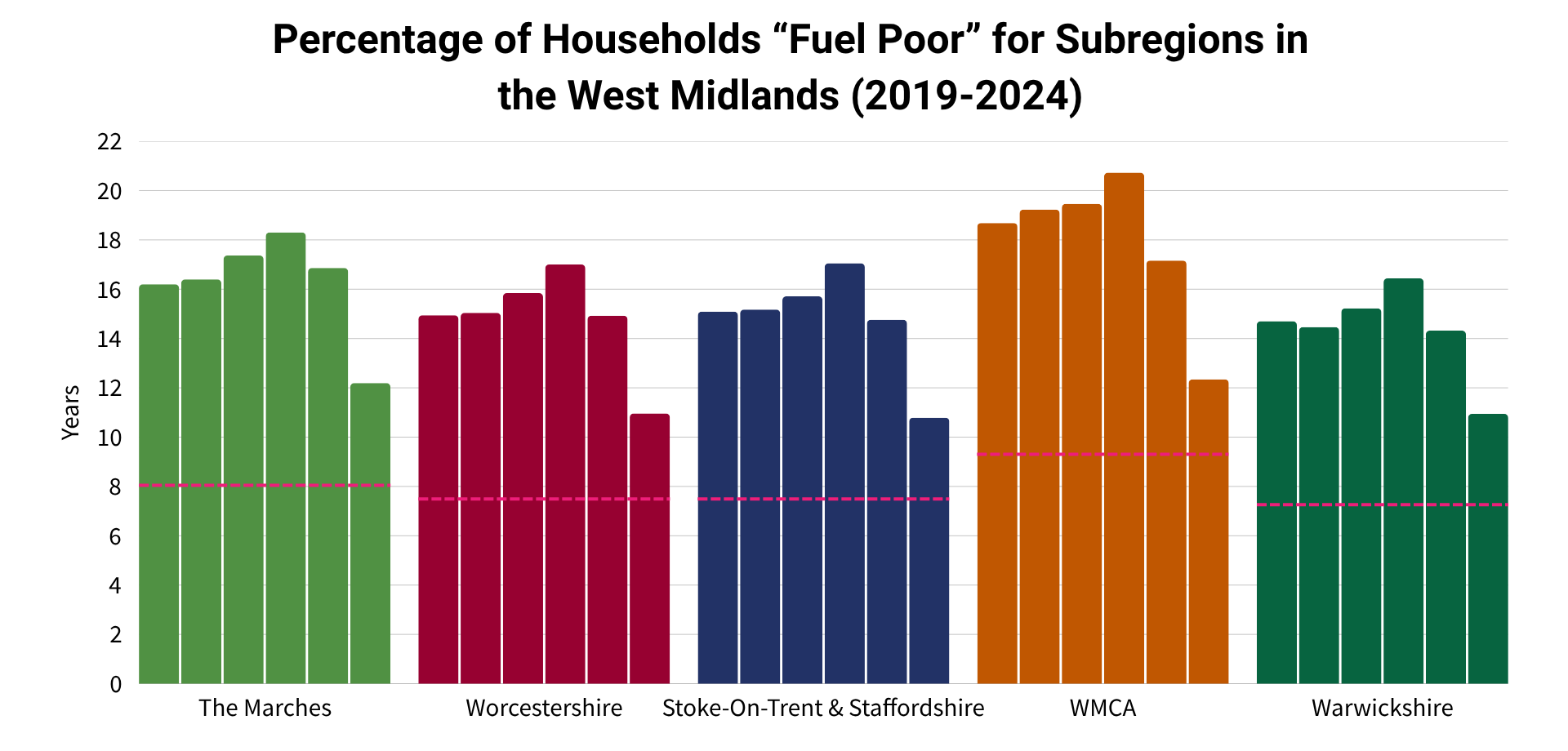
- All subregions in the West Midlands have seen a decrease in fuel poverty rates in each of the last two years.
- Fuel poverty rates are similar between all subregions. The subregion with the highest rate (WMCA) is only 1.5% higher than that with the lowest (Stoke-on-Trent & Staffordshire).
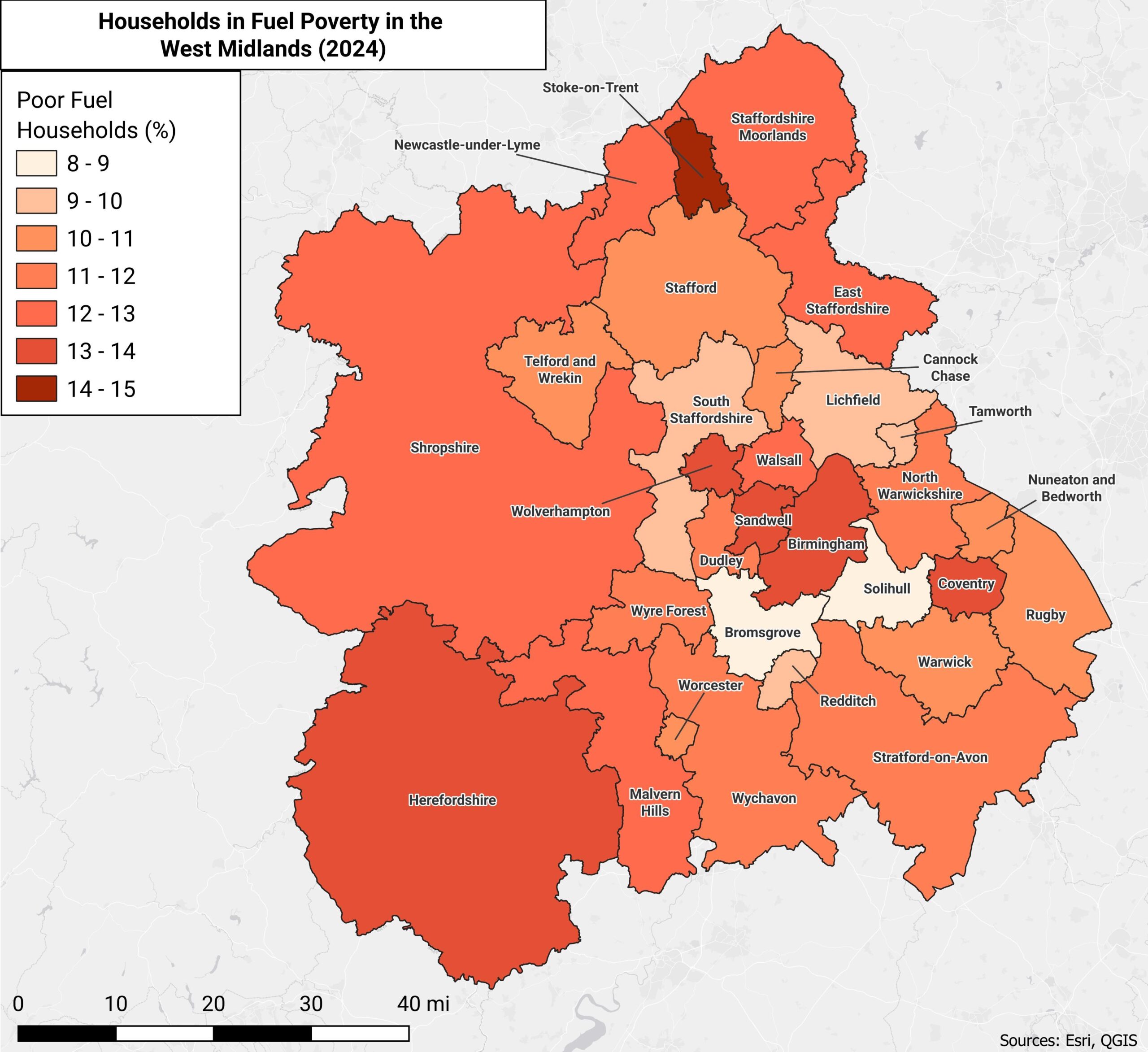
- Stoke-on-Trent is the worst performing local authority in the country, with 14.8% of households living in fuel poverty.
- A further four West Midlands local authorities are within the top eight worst performing nationally (Birmingham, Sandwell, Wolverhampton, Coventry).
- Bromsgrove (8.8%) and Solihull (8.9%) are the best performing local authorities in the West Midlands.
- The West Midlands is still the worst performing region in England. The national average is 9.9%.
Progress: We currently rate progress on achieving our target as:
Consult the latest roadmap report for more details on this theme, how the target was derived and further background and information.
For details of which of our members work on this topic, visit our Members Directory.
Choose a theme


